So, you’ve come across a 1912 dime—now the big question: what’s it worth? The truth is, the value can range anywhere from just a few dollars (based on silver content) to more than $1,000 for a pristine, uncirculated coin. The difference lies in three main factors: its mint mark, its condition (or “grade”), and its rarity. While online price charts can give you a ballpark figure, nothing replaces a professional in-person appraisal if you want to know exactly what you have.
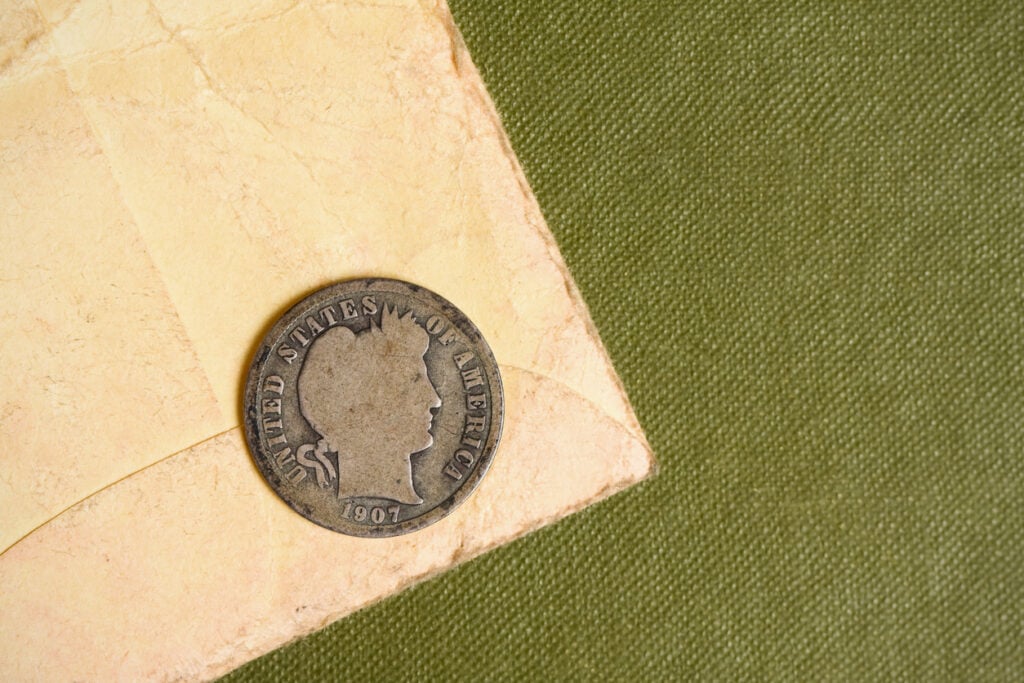
A Glimpse into History: The Barber Dime
Your 1912 dime isn’t just pocket change—it’s a little piece of American history. Known to collectors as the Barber Dime, it was designed by U.S. Mint engraver Charles E. Barber and produced from 1892 through 1916.
Each Barber dime is made of 90% silver and 10% copper, giving it a built-in value that far exceeds its face value of ten cents. In 1912, America was in the middle of rapid industrial growth, and these coins were used heavily in day-to-day commerce. Because most of them were spent and worn down, examples that survive in excellent condition are highly sought after by collectors today.
Mint Marks: The Tiny Details That Matter
One of the biggest factors in determining the value of your dime is its mint mark—a small letter that shows which U.S. Mint produced the coin. In 1912, Barber dimes were struck in three different locations:
Philadelphia (no mint mark): The most common version.
Denver (“D”): Less common and more valuable than Philadelphia.
San Francisco (“S”): The scarcest and often the most prized by collectors.
To locate the mint mark, flip the coin to the reverse side (the one with the wreath). The letter, if there is one, will appear just below the bow at the bottom.
1912 Barber Dime Values by Mint Mark and Condition
Coin values depend on both rarity and condition. A coin that’s been passed around for decades will be worth much less than one that looks brand new. Here’s a general idea of what collectors might pay:
| Mint Mark | Good (G-4) | Very Good (VG-8) | Fine (F-12) | Extremely Fine (EF-40) | Uncirculated (MS-60+) |
|---|---|---|---|---|---|
| P (None) | $3 – $5 | $6 – $8 | $10 – $15 | $45 – $60 | $150+ |
| D | $6 – $10 | $15 – $25 | $40 – $60 | $120 – $150 | $320+ |
| S | $4 – $6 | $8 – $12 | $15 – $25 | $75 – $95 | $200+ |
As you can see, the mint mark and condition dramatically influence the value. A heavily worn coin might bring only a few dollars, while a Mint State dime with sharp details can reach hundreds of dollars or more.
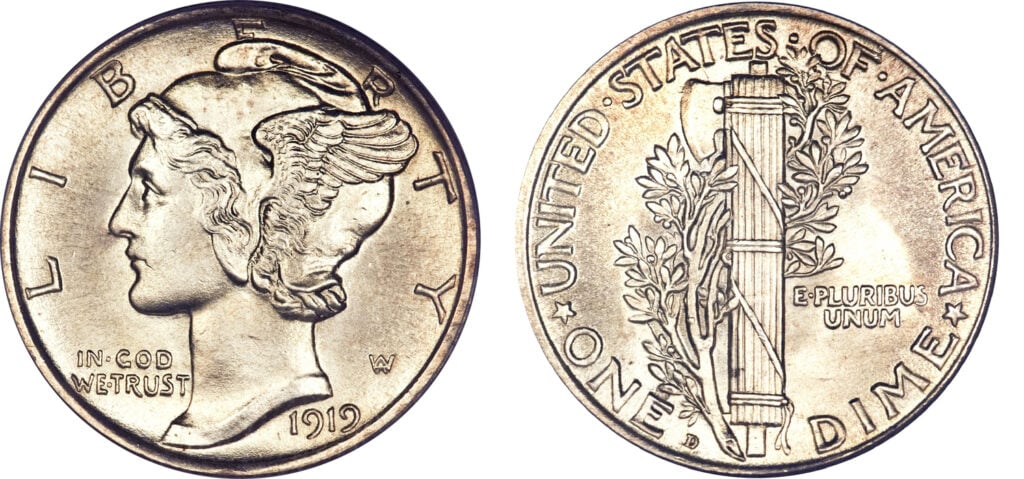
How Condition Affects Value
Grading coins is like evaluating classic cars. A “daily driver” with dents and scratches (Good condition) is still valuable, but a “showroom model” that has barely been touched (Mint State) is far more desirable.
Good (G-4): Details are worn flat, and “LIBERTY” on the headband is mostly gone.
Fine (F-12): Some letters in “LIBERTY” are visible; the wreath has a bit more detail.
Extremely Fine (EF-40): Strong detail in Liberty’s hair and the wreath; “LIBERTY” is fully readable.
Mint State (MS-60+): No wear at all, with original mint luster still shining.
Even a small jump in grade can make a big difference in price.
Why Professional Grading Matters
Collectors place huge importance on third-party grading services like PCGS (Professional Coin Grading Service) and NGC (Numismatic Guaranty Company). A certified grade not only confirms authenticity but also gives buyers confidence in the quality, which can dramatically increase resale value.
For example, while an ungraded 1912 dime might sell for $10–$20, a certified Mint State example has been known to sell for several thousand dollars at auction.
Turning Your 1912 Dime into Cash in Chesapeake, VA

If you’re considering selling your coin, you want the process to be safe, simple, and rewarding. While online buyers might seem tempting, mailing out your valuables often comes with risks—delays, shipping problems, and lowball offers once your item is out of your hands.
That’s why selling locally is your best option. At VA Premier Pawn in Chesapeake, you can:
-
Get an instant offer—no waiting around for checks.
-
Avoid shipping risks—your coin stays with you until you accept the offer.
-
Receive expert evaluation—we look at more than just silver content; we recognize historical and collector value too.
-
Enjoy peace of mind—with a transparent, face-to-face process.
Common Questions About the 1912 Barber Dime
Is the silver content enough to make it valuable?
Each 1912 dime has about 0.0723 troy ounces of silver, so even in poor shape, it’s worth more than face value. But collector interest almost always pushes it higher than melt value.
Which version is the rarest?
The 1912-S (San Francisco) is the scarcest, followed by the 1912-D (Denver). Philadelphia coins are the most common.
Should I clean my coin before selling?
No. Cleaning can ruin the coin’s natural toning and scratch the surface, which lowers its value significantly. Always bring it in as-is.
Where can I sell or appraise my coin in Chesapeake?
Bring your 1912 dime to VA Premier Pawn. We’ll evaluate it for free and give you a fair, competitive offer right here in Hampton Roads.
Discover the True Value of Your Barber Dime
Whether your 1912 dime is a common Philadelphia issue or a rare San Francisco find, it deserves to be evaluated by someone who understands both its silver and collectible value. At VA Premier Pawn in Chesapeake, VA, we specialize in coins, gold, and collectibles. Our mission is to provide fair, transparent offers that give you the best possible return.
Don’t settle for uncertainty or take chances online. Stop by VA Premier Pawn today and let us help you uncover the story—and the value—behind your 1912 Barber Dime.